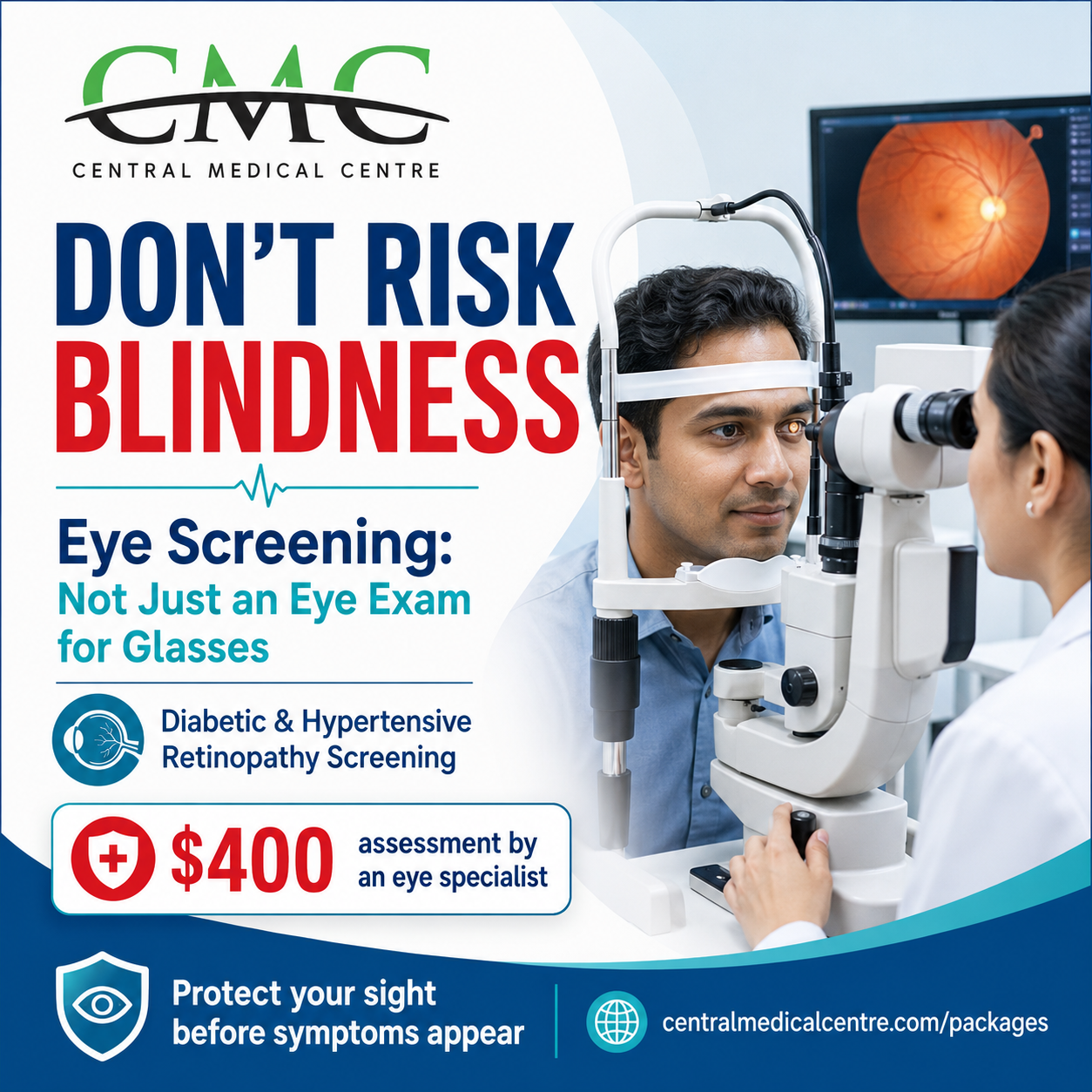
Many people think an eye exam is only about checking whether they need glasses.
But for patients with diabetes or high blood pressure, an eye exam can be much more important than a glasses prescription. These conditions can damage the tiny blood vessels at the back of the eye, sometimes before you notice any change in your vision.
That is why retinal screening is so important. At Central Medical Centre, diabetic and hypertensive retinopathy screening is available for $400, with assessment by an eye specialist who can examine the retina, check for bleeding or blood vessel damage, and guide you on the next step if treatment or follow-up is needed.
This is not just a glasses check. It is an eye health assessment for patients at risk of retinal bleeding, vessel damage, and vision loss.
What is retinopathy?
The retina is the light-sensitive layer at the back of the eye. It helps convert what you see into signals that travel to the brain.
When diabetes or high blood pressure damages the blood vessels in the retina, this is called retinopathy.
Diabetic retinopathy
Diabetic retinopathy happens when high blood sugar damages the retinal blood vessels. These vessels may leak, bleed, swell, or grow abnormally.
Hypertensive retinopathy
Hypertensive retinopathy happens when high blood pressure damages the retinal blood vessels. Findings may include narrowed arteries, bleeding, cotton wool spots, swelling, or other signs of vascular stress.
Why screening matters even if your vision seems normal
One of the biggest dangers of diabetic and hypertensive eye disease is that it may be silent early.
You may still be reading, driving, working, and seeing clearly while damage is already developing at the back of the eye.
By the time vision becomes blurry, patchy, or distorted, the condition may already be more advanced. Early screening gives your doctor and eye specialist a chance to identify changes before permanent vision loss occurs.
What can diabetic or hypertensive eye disease cause?
If untreated, retinal disease may lead to:
- Bleeding at the back of the eye
- Diabetic retinopathy
- Hypertensive retinopathy
- Swelling of the retina or macula
- Blurred or distorted vision
- Floaters or dark spots
- Sudden vision changes
- Permanent vision loss
Not every patient will develop severe disease, but the risk is higher when diabetes or blood pressure is poorly controlled, long-standing, or combined with other health problems such as kidney disease or high cholesterol.
Who should have eye screening?
Eye screening is especially important if you have:
- Diabetes
- High blood pressure
- Both diabetes and hypertension
- Kidney disease
- High cholesterol
- Blurred vision
- Floaters
- Headaches with uncontrolled blood pressure
- Previous eye bleeding or retinal disease
- Long-standing diabetes or hypertension
- Poor blood sugar or blood pressure control
You should also get assessed promptly if you notice sudden vision loss, new floaters, flashing lights, eye pain, or sudden blurring.
How often should diabetic patients screen?
For diabetes, eye screening is part of good diabetes management.
Many guidelines advise that adults with type 2 diabetes have their first eye exam at diagnosis, because diabetes may have been present for years before being detected. People with type 1 diabetes are commonly advised to begin eye screening about 5 years after diagnosis.
- Type 2 diabetes: eye screening from diagnosis
- Type 1 diabetes: usually start about 5 years after diagnosis
- Ongoing screening: often at least once per year
- If retinopathy is present: follow-up may need to be more frequent
- If exams are normal and diabetes is well controlled: your doctor or eye specialist may advise a longer interval
How often should hypertensive patients screen?
There is no single universal screening interval for every patient with high blood pressure. Frequency depends on blood pressure control, duration of hypertension, symptoms, and whether eye changes are found.
Retinal assessment is especially important if your blood pressure has been high for years, is poorly controlled, or if you also have diabetes, kidney disease, headaches, or vision symptoms.
For many patients with hypertension, an eye specialist may recommend screening every year or at intervals based on the findings.
What happens during the assessment?
During a diabetic or hypertensive retinopathy screening, the eye specialist checks the back of the eye for signs of damage.
The assessment may include:
- Review of your diabetes or blood pressure history
- Vision assessment
- Examination of the retina
- Checking for bleeding, swelling, vessel narrowing, or abnormal changes
- Advice on whether follow-up, treatment, or referral is needed
This is different from a routine glasses check. A glasses test looks mainly at focusing and vision correction. Retinopathy screening looks at the health of the retina and blood vessels.
What if bleeding is found?
Bleeding at the back of the eye should not be ignored.
Depending on the severity and cause, the eye specialist may recommend closer monitoring, better blood sugar or blood pressure control, further imaging, referral to a retinal specialist, or treatment.
Finding bleeding early gives patients the best chance of protecting vision.
Central Medical Centre eye screening
At Central Medical Centre, diabetic and hypertensive retinopathy screening is available for $400.
This includes assessment by an eye specialist to examine the retina and check for signs of bleeding, diabetic retinopathy, hypertensive retinopathy, or other concerning changes.
This service is suitable for patients with:
- Diabetes
- High blood pressure
- Diabetes and hypertension together
- Vision changes
- Known previous retinal disease
- Concern about eye bleeding or retinal damage
Don’t wait for blurry vision
Clear vision does not always mean healthy eyes.
If you have diabetes or high blood pressure, your eyes need more than a glasses check. Retinal screening can detect damage early, guide treatment, and help protect your sight.
Don’t risk blindness. Protect your sight before symptoms appear.
Central Medical Centre
Your Health. Our Priority.
References